Ssh Generate Public Key Rsa
Now add the public key hash to the authorized key file on the target server (may need to have someone do this for you), restart sshd and you can begin logging into that specific server with keys NOTE: PuTTY and OpenSSH use different formats for public SSH keys.
SSH keys are a way to identify trusted computers, without involving passwords. The steps below will walk you through generating an SSH key and adding the public key to the server.

Step 1: Check for SSH Keys
First, check for existing SSH keys on your computer. Open Git Bash, Cygwin, or Terminal, etc. and enter:
Openssl Generate Ssh-rsa Public Key
Check the directory listing to see if you already have a public SSH key. By default, the filenames of the public keys are one of the following:
CISCO ASA 5505CISCO ASA 5510The two smallest ASA Firewall models, the 5505 and the 5510, are the only ones that have two types of licenses.They can be ordered either with a Base License or a Security Plus License. Cisco asa 5510 activation key generator.
Public key authentication is a way of logging into an SSH/SFTP account using a cryptographic key rather than a password. If you use very strong SSH/SFTP passwords, your accounts are already safe from brute force attacks. However, using public key authentication provides many benefits when working with multiple developers. Oct 05, 2007 ssh-keygen can generate both RSA and DSA keys. RSA keys have a minimum key length of 768 bits and the default length is 2048. When generating new RSA keys you should use at least 2048 bits of key length unless you really have a good reason for using a shorter and less secure key. Sep 06, 2019 Generating your key pair and propagating your public key is simpler than it sounds. Let’s walk through it. Generating the key. The minimum effort to generate a key pair involves running the ssh-keygen command, and choosing the defaults at all the prompts: $ ssh-keygen Generating public/private rsa key.
- id_dsa.pub
- is_ecdsa.pub
- id_ed25519.pub
- id_rsa.pub
If you see an existing public and private key pair listed (for example id_rsa.pub and id_rsa) that you’d like to use, you can skip Step 2 and go straight to Step 3.
Step 2: Generate a new SSH key
With your command line tool still open, enter the text shown below. Make sure you substitute in your email address:
You’ll be asked to enter a passphrase, or simply press Enter to not enter a passphrase:
After you enter a passphrase (or just press Enter twice), review the fingerprint, or ‘id’ of your SSH key:
Step 3: Add your key to the ssh-agent
To configure the ssh-agent program to use your SSH key, first ensure ssh-agent is enabled.
If you are using Git Bash, turn on the ssh-agent with command shown below instead:
Then, add your SSH key to the ssh-agent:
Step 4: Add your SSH key to the server
Pgp Key
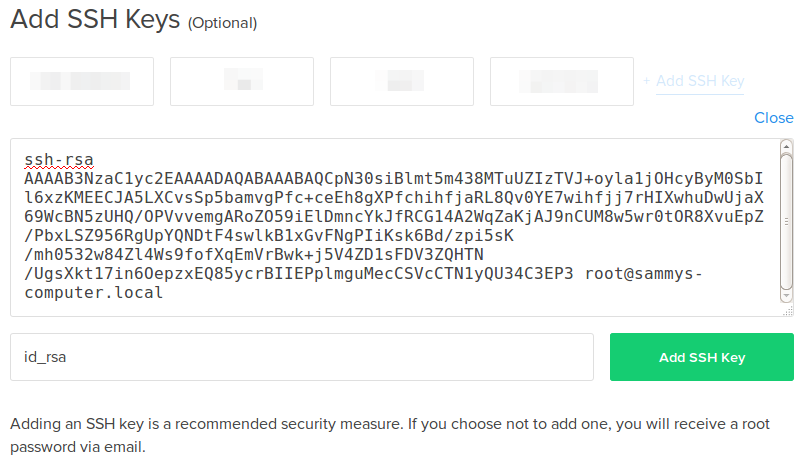
To add your public SSH key to the server, you’ll copy the public SSH key you just created to the server. Substitute “username” with your username on the server, and “server.address.com” with the domain address or IP address of your server:
The server will then prompt you for your password:
Ssh Key Rsa Format
That’s it! You should now be set up to connect to the server without having to authenticate.
Generate a new SSH key.Add to the ssh-agent Step 1: Open Terminal. Step 2: Type this below, using your GitHub's account email. Step 3: It will show up this text and you can hit Enter. Step 4: In this section you can hit Enter too or type secure passphrase ( more about passphrase ). In order to add a SSH key to your GitHub account, head over to the settings of your account and select the “SSH and GPG keys” option in the left menu. On the right panel, click on the “ New SSH key ” button in order to create a new SSH key for Github. Github git generate ssh key. GitHub Enterprise Server Authentication Connecting to GitHub with SSH Generating a new SSH key and adding it to the ssh-agent Generating a new SSH key and adding it to the ssh-agent After you've checked for existing SSH keys, you can generate a new SSH key to use for authentication, then add it to the ssh-agent. Generating Your SSH Public Key Many Git servers authenticate using SSH public keys. In order to provide a public key, each user in your system must generate one if they don’t already have one. Generating a new SSH key. Open Terminal Terminal Git Bash the terminal. Paste the text below, substituting in your GitHub Enterprise email address. $ ssh-keygen -t rsa -b 4096 -C 'youremail@example.com' This creates a new ssh key, using the provided email as a label. Generating public/private rsa key pair.