Ssl Certificate Private Key Generation
- Godaddy Ssl Certificate Private Key
- Ssl Certificate Private Key Generation 2017
- Get Private Key From Certificate
- Ssl Certificate With Private Key
Introduction
A Certificate Signing Request (CSR) is the first step in setting up an SSL Certificate on your website. SSL certificates are provided by Certificate Authorities (CA), which require a Certificate Signing Request (CSR).
What is a private key? All SSL Certificates require a private key to work. The private key is a separate file that’s used in the encryption/decryption of data sent between your server and the connecting clients. A private key is created by you—the certificate owner—when you request your certificate with a Certificate Signing Request (CSR). You should generally NOT generate the RSA private key with a passphrase if you have scripts that restart apache automatically in case of a crash or otherwise. If there is a passphrase, Apache will just sit there and wait for the script to input the passphrase which means downtime, and downtime usually equals bad. Next generate the CSR using the. Step 1: Gener ate a Private Key. The openssl toolkit is used to generate an RSA Private Key and CSR (Certificate Signing Request). It can also be used to generate self-signed certificates which can be used for testing purposes or internal usage. The first step is to create your RSA Private Key.
This guide will instruct you on how to generate a Certificate Signing Request using OpenSSL.
- Access to a user account with root or sudo privileges
- A command line/terminal window
- If you’re working on a remote server, an established SSH connection to the server
- OpenSSL needs to be installed on your system to generate the key
- A text editor, such as nano, to view your key
Open a terminal window. Use your SSH connection to log into your remote server.
Note: If you are working locally, you don’t need an SSH connection. Also, most Linux systems will launch a terminal window by pressing Ctrl-Alt-T or Ctrl-Alt-F1.
Step 2: Create an RSA Private Key and CSR
It is advised to issue a new private key each time you generate a CSR. Hence, the steps below instruct on how to generate both the private key and the CSR.
Make sure to replace your_domain with the actual domain you’re generating a CSR for.
The commands are broken out as follows:
- openssl – activates the OpenSSL software
- req – indicates that we want a CSR
- –new –newkey – generate a new key
- rsa:2048 – generate a 2048-bit RSA mathematical key
- –nodes – no DES, meaning do not encrypt the private key in a PKCS#12 file
- –keyout – indicates the domain you’re generating a key for
- –out – specifies the name of the file your CSR will be saved as
Godaddy Ssl Certificate Private Key
Note: Use 2048-bit key pairs. The 4096-bit key pairs are more secure, however, they require a lot more server resources.
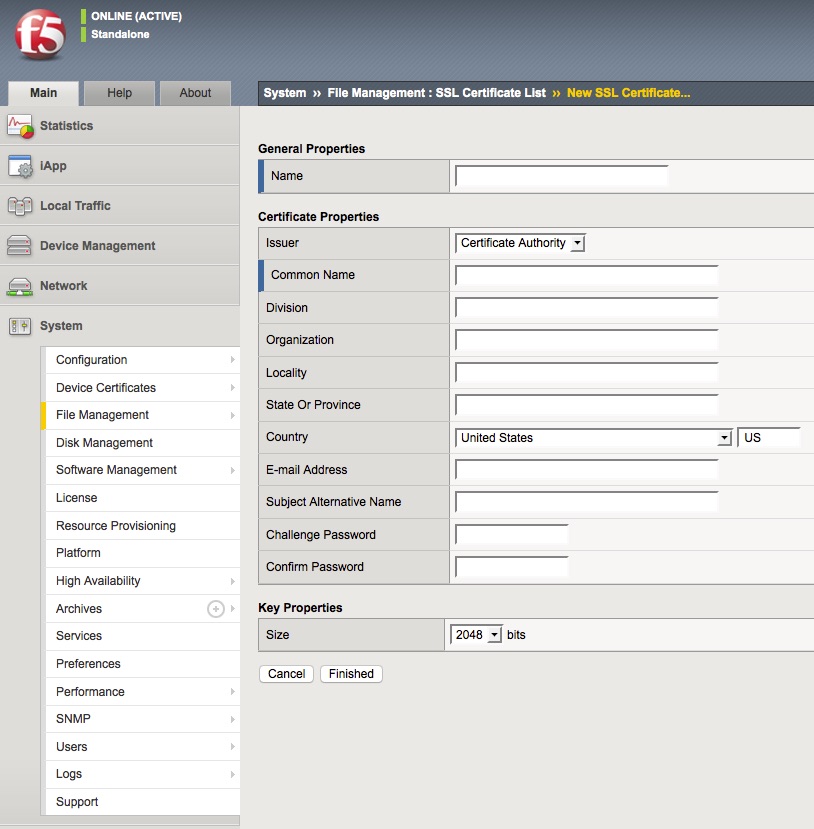
Your system should launch a text-based questionnaire for you to fill out.
Enter your information in the fields as follows:
- Country Name – use a 2-letter country code (US for the United States)
- State – the state in which the domain owner is incorporated
- Locality – the city in which the domain owner is incorporated
- Organization name – the legal entity that owns the domain
- Organizational unit name – the name of the department or group in your organization that deals with certificates
- Common name – typically the fully qualified domain name (FQDN), i.e. what the users type in a web browser to navigate to your website
- Email address – the webmaster’s email address
- Challenge password – an optional password for your key pair
Please take into account that Organization Name and Unit Name must not contain the following characters:
Ssl Certificate Private Key Generation 2017
< > ~ ! @ # $ % ^ * / ( ) ?.,&
Once the software finishes, you should be able to find the CSR file in your working directory.
You can also enter the following:

The system should list out all certificate signing requests on the system. The one that matches the domain name you provided in Step 2 appended with the .csr extension is the one you need to look into.
Step 5: Submit the CSR as Part of Your SSL Request

You can open the .csr file in a text editor to find the alphanumeric code that was generated.
Enter the following command:
This text can be copied and pasted into a submittal form to request your SSL certificate from a Certificate Authority.
Make sure you copy the entire text. Some CAs may allow you to simply upload the .csr file you generated. Below is an example of a CSR.
Get Private Key From Certificate
You needn’t send the private key to the CA. Once you get your SSL certificate, the private key on the server will bind with it to encrypt communication.
Ssl Certificate With Private Key
Now you know how to generate an OpenSSL certificate signing request. Before submitting the CSR to a certificate authority, we recommend verifying the information it holds. Use one of the widely available online CSR decoders.
SSL is a crucial protocol for securing traffic between a website and its visitors. It helps to protect sensitive information online, such as credit card data.
Next, You Should Also Read: